Lockout Tagout Procedures
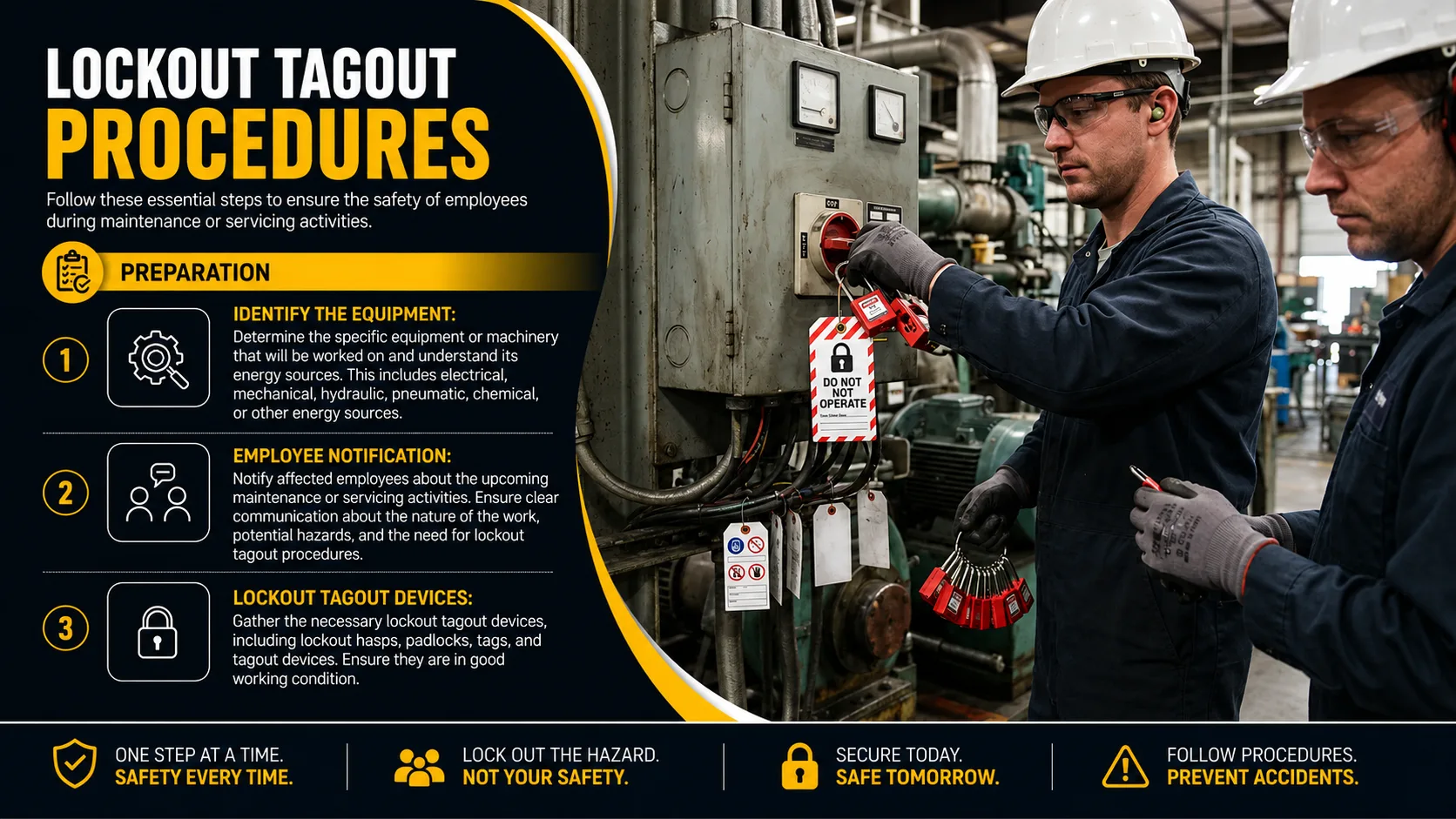
Preparation
- Identify the Equipment: Determine the specific equipment or machinery that will be worked on and understand its energy sources. This includes electrical, mechanical, hydraulic, pneumatic, chemical, or other energy sources..
- Employee Notification: Notify affected employees about the upcoming maintenance or servicing activities. Ensure clear communication about the nature of the work, potential hazards, and the need for lockout tagout procedures.
- Lockout Tagout Devices: Gather the necessary lockout tagout devices, including lockout hasps, padlocks, tags, and tagout devices. Ensure they are in good working condition.
Notify and Shut Down:
- Affected Employee Notification: Inform affected employees that the equipment will be shut down for maintenance or servicing. Clearly communicate the time frame and any necessary precautions
- Proper Equipment Shutdown: Follow the appropriate procedures to safely shut down the equipment. This may involve following the manufacturer’s instructions, using control switches, or shutting off energy sources.
Isolation
- Energy-Isolating Devices: Identify and locate all energy-isolating devices that control the equipment’s energy sources, such as electrical switches or valves.
- Lockout Device Application: Apply lockout devices to each energyisolating device. These devices physically prevent the operation or energization of the equipment. Ensure that lockout devices are securely fastened in place.
Release Stored Energy:
- Verify Isolation: Before proceeding, confirm that all energy sources have been effectively isolated. Follow specific procedures to safely dissipate or release any stored energy. This may involve bleeding pressure, draining fluids, or discharging capacitors.
Application of Lockout Tagout Devices:
- Lockout Device Attachment: Attach lockout devices to each energy-isolating device. This ensures that the devices cannot be operated or energized. The lockout devices should be securely attached and capable of withstanding external forces.
- Tagout Device Application: Use tags or tagout devices that clearly indicate the reason for the lockout, such as “Do Not Operate” or “Under Maintenance.” Tags provide a visual warning and should contain relevant information like the name of the authorized person and the expected completion time.
Maintenance or Servicing:
- Task Execution: Once the lockout tagout procedures are in place and verified, perform the necessary maintenance or servicing tasks according to established procedures and safety guidelines. This may include repairs, adjustments, cleaning, or inspections.
Completion and Removal:
- Work Area Cleanup: Once the maintenance or servicing is completed, ensure that all tools, equipment, and personnel are removed from the work area.
- Lockout Tagout Device Removal: Remove lockout tagout devices only when it is safe to re-energize the equipment. This should only be done by the authorized employee who applied the devices.
- Employee Notification: Notify affected employees that the lockout tagout has been completed and that the equipment is ready for use. Provide any necessary safety instructions or precautions.
It’s important to note that lockout tagout procedures should be documented in written form, clearly outlining each step and specific instructions for the equipment in question. Additionally, proper training on lockout tagout procedures is essential for authorized employees and affected employees to ensure their safety and compliance with regulations.
Quick Links