Negligence in Lockout Tagout
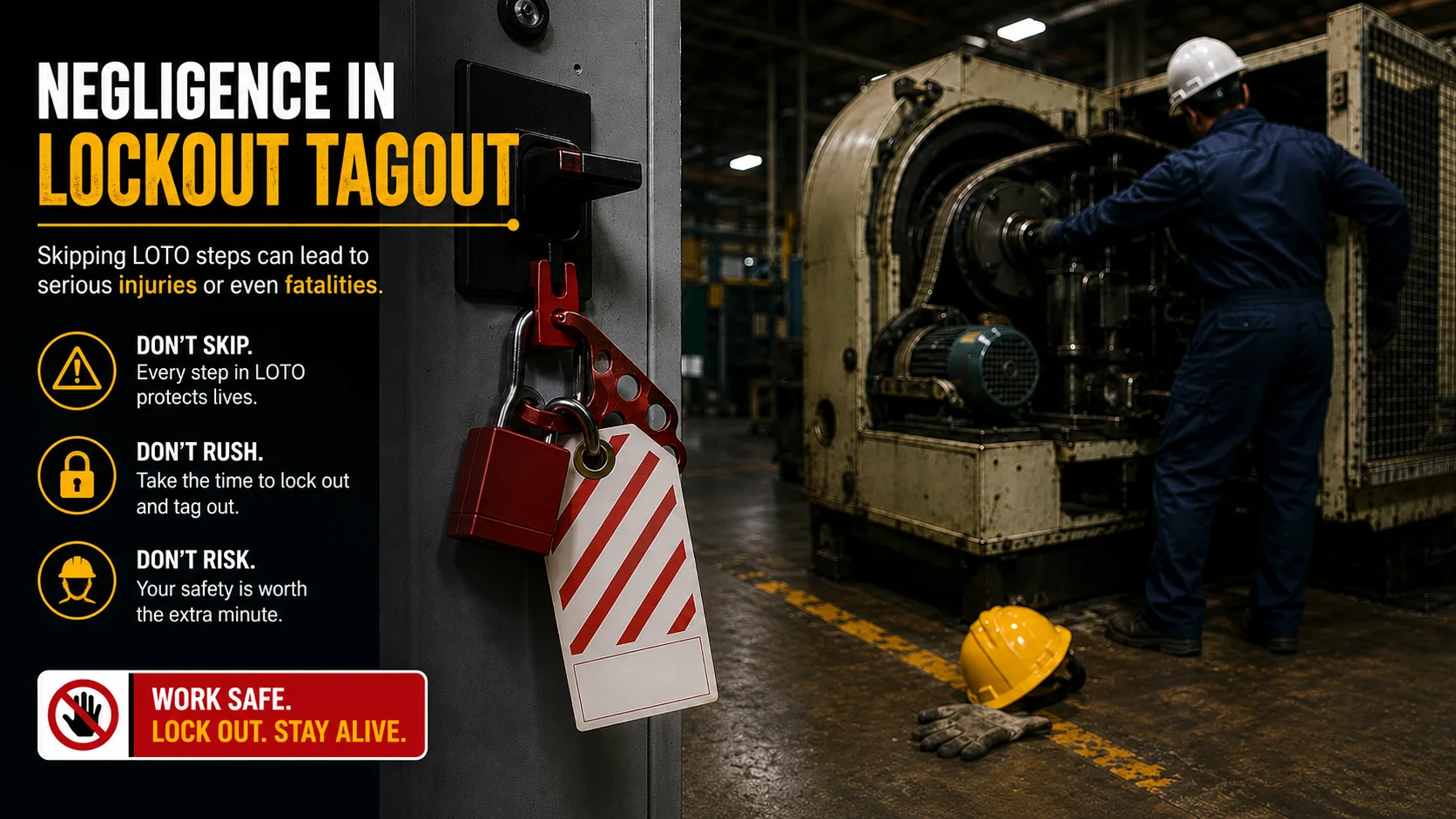
Lockout Tagout (LOTO) is a crucial safety procedure used in industrial and maintenance settings to protect workers from hazardous energy sources during equipment servicing and maintenance activities. However, failure to properly implement lockout tagout measures can have severe consequences, leading to accidents and injuries. Negligence in lockout tagout procedures can occur in several ways, including:
- Inadequate Training: Insufficient training of employees on lockout tagout procedures can result in errors or ignorance of the proper steps to take. This may lead to failure in identifying energy sources, applying lockout devices, or following the established protocols.
- Miscommunication: Poor communication among workers involved in maintenance activities can lead to misunderstanding or ignorance of ongoing lockout tagout procedures. Without clear communication channels, employees may unintentionally energize equipment or interfere with the isolation measures, risking accidents.
- Failure to Follow Procedures: Neglecting to strictly adhere to lockout tagout procedures can have disastrous consequences. Employees may bypass lockout devices, remove tags without authorization, or attempt maintenance activities without proper isolation, exposing themselves and others to hazardous energy sources.
- Lack of Equipment Inspections: Failure to regularly inspect lockout tagout devices and equipment can lead to malfunction or damage. If devices are defective or unreliable, they may not effectively prevent the accidental release of hazardous energy.
The consequences of negligence in lockout tagout can be severe, including:
- Equipment-related Injuries: Accidental energization of equipment can result in severe injuries, such as electrocution, burns, amputations, or crushing injuries. Without proper lockout tagout measures in place, workers can be exposed to uncontrolled energy sources, leading to life-threatening incidents.
- Worker Fatality: In extreme cases, negligence in lockout tagout can result in fatal accidents. The failure to properly isolate energy sources can lead to unexpected equipment startup or the release of stored energy, causing fatal injuries to workers involved in maintenance activities.
- Legal and Financial Consequences: Organizations that neglect lockout tagout procedures may face legal repercussions, including fines and penalties for non-compliance with safety regulations. Additionally, legal settlements and compensation claims resulting from accidents can lead to significant financial losses for the organization.
To prevent accidents and mitigate the risk of negligence, it is crucial for employers and employees to prioritize lockout tagout safety by:
- Providing Comprehensive Training: Ensuring that all employees involved in maintenance activities receive thorough training on lockout tagout procedures, including recognizing hazardous energy sources, understanding the purpose and use of lockout tagout devices, and following established protocols.
- Establishing Clear Communication: Implementing effective communication channels to inform employees about ongoing lockout tagout activities, sharing updates, and coordinating tasks to avoid conflicts or misunderstandings.
- Enforcing Compliance: Regularly monitoring and enforcing compliance with lockout tagout procedures to ensure that all employees strictly follow the established protocols and use appropriate lockout tagout devices.
- Conducting Equipment Inspections: Regularly inspecting and maintaining lockout tagout devices and equipment to ensure they are in proper working condition, reliable, and capable of effectively isolating energy sources.
By prioritizing lockout tagout procedures and addressing potential negligence, organizations can significantly reduce the occurrence of accidents, protect the safety of their employees, and comply with safety regulations.