What is Lockout Tagout?
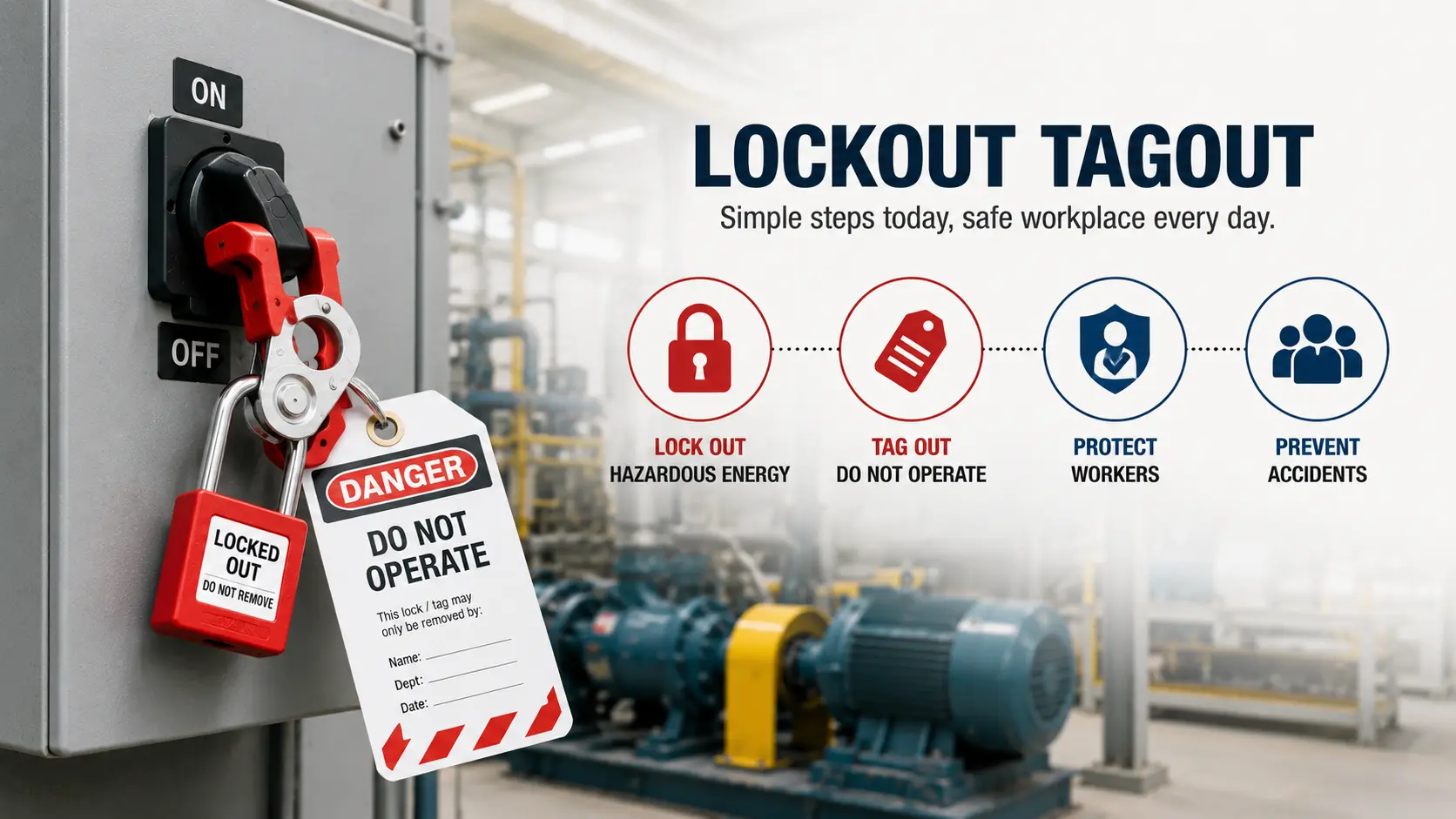
Every year thousands of workers get killed or injured while performing repairs or maintenance on industrial equipment or machinery. These accidents are caused by the unexpected energization or start-up of machines or equipment or by the uncontrolled release of energy. Many of these accidents can be prevented by implementing proper LOCKOUT TAGOUT.
Lockout Tagout, also known as LOTO or LOTOTO, is a safety procedure used in industries and workplaces to control hazardous energy sources during servicing, maintenance, and repair activities. It involves the isolation of energy sources and the application of lockout and tagout devices to ensure the prevention of accidental startup or release of stored energy.
The purpose of lockout tagout is to protect workers from hazardous energy sources, such as electrical, mechanical, hydraulic, pneumatic, chemical, thermal, or other energy sources, which can cause injury or fatalities if not properly controlled. The procedure ensures that machinery or equipment is safely de-energized and cannot be energized until maintenance or servicing tasks are completed.
The term “Lockout Tagout” is directly associated with OSHA Standard 29 CFR Part 1910.147. This standard, issued by the Occupational Safety and Health Administration (OSHA) in the United States, establishes the requirements for implementing and enforcing lockout tagout procedures in various industries.
The history of LOTO can be traced back to several significant events that highlighted the need for standardized safety practices. This article delves into the evolution of LOTO, its inception, and its importance in ensuring worker safety.